Summer savory
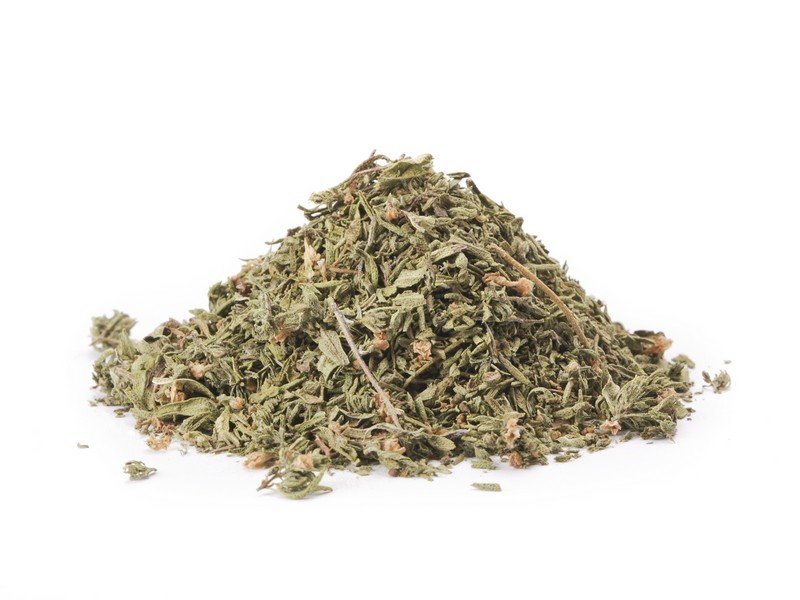
Summer savory
Satureja species
Very aromatic, summer savory was one of the strongest aromas before spices arrived to Europe.
Summer savory (S. Hortensis) originates from the eastern Mediterranean and the Caucasus; winter savory (S. Montana) from northern Europe, Turkey, and northern Africa. Both varieties were brought to Northern Europe by the Romans, and to North America by the first settlers.
FLAVOR
Savory is very peppery. Summer savory has a nice, grassy smell and taste - pleasantly spicy, slightly resinous and reminiscent of thyme, mint and marjoram.
Winter savory has a stronger and more penetrating aroma and taste, with notes of sage and pine.
USED ARE leaves and twigs, flowers for decorations and salads.
PURCHASE AND STORAGE
Savory is available in greenhouses. In a plastic bag, in the refrigerator, summer savory can stand for 5-6 days, and winter savory up to 10 days.
Savory will preserve most of its flavor if it is frozen, chopped or kept in twigs. To dry summer savory, hang the twigs in an airy, dark place and store them in a well-closed container for up to a year.
USE IN COOKING
Considering their pungency, both summer and winter savory are good spices for meat and vegetable dishes that are cooked for a long time and for fillings.
Savory is constantly associated with beans, as its German name Bohnenkraut (bean plant) shows. Summer savory is best with beans and broad beans, both of which can be used with white beans and other legumes. Savory is also good with greens, root vegetables, onions, and reduces their strong smell that arises during cooking.
Summer savory is most often added to bouquet garni for lamb, pork and game dishes. It is good with fatty fish such as eel and mackerel.
Finely chopped can be added to salads; it is especially good with potato salad, bean salad and lentil salad.
Winter savory (called poivre d'ane or pebre d'ai (donkey pepper) in Provence, France) is more commonly used around the Mediterranean. Chopped leaves and flowers are added to soups, fish dishes, pizzas, lamb and rabbit dishes. It is also used to coat Banon, Provencal cheese made from goat's or sheep's milk.
GOOD WITH beans, turnips, cabbage, cheese, eggs, fish, legumes, potatoes, rabbit, sweet peppers, tomatoes.
COMBINED WELL WITH basil, bay leaf, caraway, garlic, lavender, marjoram, mint, oregano, parsley, rosemary, thyme.
| Energy | 1139 kJ/ 272 kcal |
| Fats | 5.9 g |
| - of which saturated fatty acids | 3.3 g |
| Carbohydrates | 68.7 g |
| - of which sugars | 0 g |
| Proteins | 6.7 g |
| Salt | 0.024 g |
| Fibers | 45.7 g |
Latest Recipes
We bring you tried and tested recipes of our favorite dishes, culinary tips, and suggestions on how to best combine spices and ingredients for a complete sensory experience.
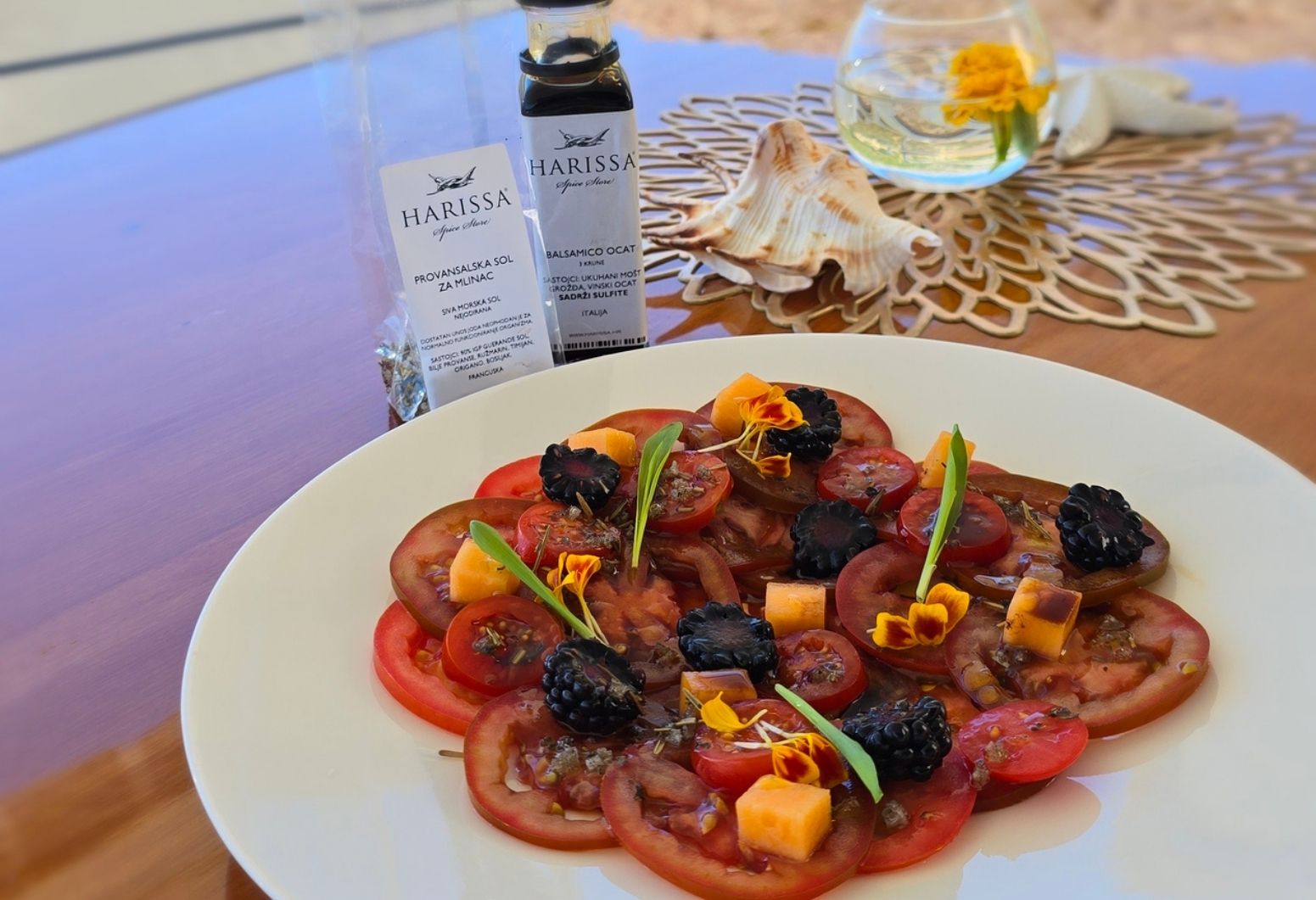
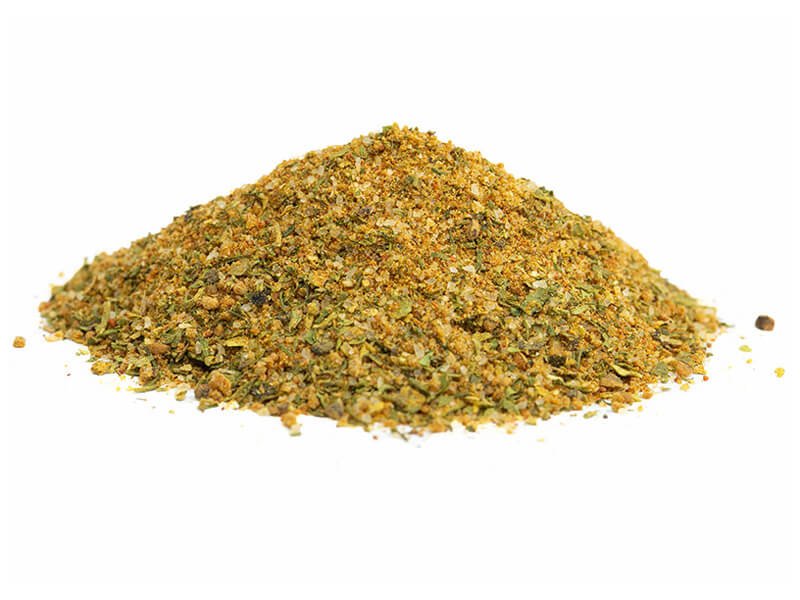
Summer Garden with Black Tomato, Melon, Black Raspberry and Harissa Provencal Salt
Summer Garden with Black Tomato
with Melon, Black Raspberry and Harissa Provençal Salt
Salad by Chef David Francesco Komadina